
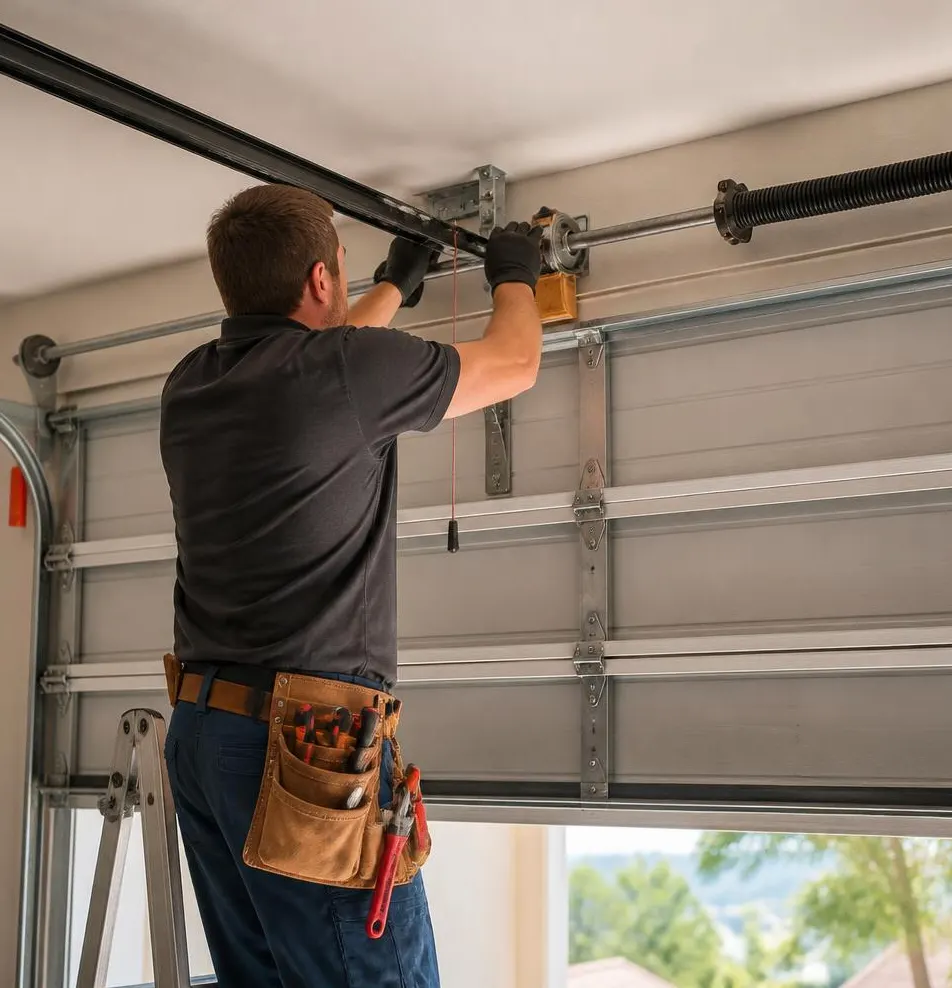
What a Service Call Looks Like After a Windstorm
After a fall squall line rips off Lake Michigan, the calls that come in the next morning usually sound the same. A homeowner heard a loud bang during the storm and found the garage door bowed inward, sometimes with a track pulled halfway off the wall. In other cases, the door never came off track, but the panels have a visible wave to them that wasn't there before. Occasionally the opener's trolley has sheared off the rail entirely because the door tried to lift under pressure it was never built to handle. None of this is random bad luck. It's physics, and it points to the same weak spot every time.
Why the Garage Door Takes the Hit First
Think about the exterior walls of a house. They're framed with studs, sheathed, insulated, and tied into the structure at multiple points. A garage door is a single large panel, often 16 feet wide, hung on hinges and rollers, held shut mostly by its own weight and a couple of tracks bolted to the frame. It's the biggest opening in the wall and the least structurally reinforced. When straight-line winds push against a house, that door panel absorbs far more pressure per square foot than the siding around it, and it has the least backup to resist that force.
Older sectional doors, especially ones installed before wind load reinforcement became common, often have no internal struts at all. The steel skin can flex several inches under sustained gusts, and repeated flexing fatigues the panels, the hinges, and the track fasteners even if the door never actually fails during the storm itself.
The Chain Reaction Nobody Expects
A door that bows under wind pressure doesn't just risk cosmetic damage. If it separates from the track, wind and rain get a direct path into the garage, and once that happens, the pressure inside the structure changes, putting additional stress on the roof and other walls. This is part of why a garage door failure during a severe storm can turn into a bigger structural problem than the storm itself would have caused otherwise.
Practical Steps Before the Next Storm Rolls Through
- Check for horizontal struts. Open the door and look at the back of each panel. Reinforced doors have horizontal steel struts running across the inside. If yours doesn't have them, a retrofit wind-load kit can be added to an existing door for a fraction of the cost of full replacement.
- Inspect track hardware. Look for lag bolts that have backed out of the wall studs, bent track sections, or rust at the connection points, which is common here given the humidity and road salt that finds its way into garages over winter. Loose hardware is often the first thing to give way under wind load.
- Test the auto-reverse and sensors. A door under wind stress can trigger false reversals or fail to seat properly. If the sensors are misaligned or dirty, the door may not close fully right when you need it sealed tight.
- Check weatherstripping and the bottom seal. Cracked or flattened seals let wind-driven rain into the garage, which then sits against stored items and the slab. Replacing a worn bottom seal is inexpensive and prevents most of this.
- Consider a battery backup for the opener. Storms here often knock out power along with high wind. A battery backup means you can still open the door manually or electrically if a tree limb comes down on a line mid-storm.
- Don't ignore spring tension. Springs under heavy use or already near the end of their cycle life are more likely to snap under the extra stress of a door flexing in wind. A spring that lets go during a storm leaves the door essentially unsupported.
Reinforcement vs. Replacement
For many homes, adding strut reinforcement, upgrading track anchors, and servicing the springs and opener is enough to bring an existing door up to a reasonable wind resistance standard, and it costs far less than replacement, often in the low hundreds of dollars range depending on the door size and condition. For doors that are already warped, rusted through at the bottom panel, or original to a much older build, replacement with a door rated for higher wind pressure is usually the better long-term move, particularly for homes exposed to open wind corridors near the shoreline.
When to Call Holland Garage Door Service
If your door bowed, came off track, or you're hearing new noises after a windy night, that's not something to wait on. Our technicians inspect the track alignment, panel condition, and spring tension, then recommend either a targeted repair or a Garage Door Installation if the existing door is beyond reinforcing. If it's just been a while since anyone checked the hardware, our Preventive Maintenance service catches loose fasteners, worn seals, and aging springs before a storm turns them into an emergency call.
Don't wait for the next squall line off the lake to find out how your door holds up. Call Holland Garage Door Service today and get your door storm-ready before the weather decides to test it for you.