
The Quick Answer
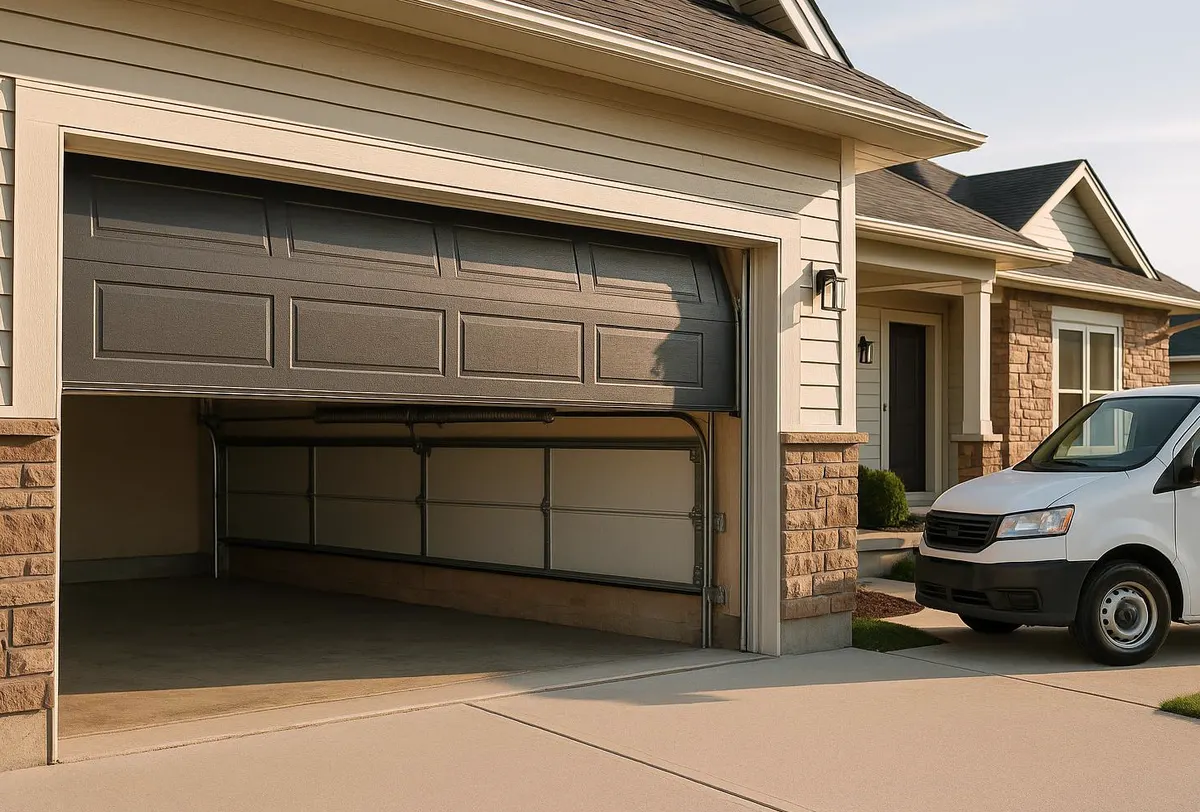
Disconnect the opener, lift the door by hand to about waist height, and let go. A properly balanced door will stay put, or drift down just slightly. If it crashes shut or shoots upward on its own, the springs aren't doing their job anymore, and your opener has been quietly picking up the slack. That's a problem worth catching early, especially before another West Michigan winter asks your whole system to work harder.
What an Unbalanced Door Does to Your Opener
A garage door is supposed to be counterbalanced by its springs so the opener only has to provide a small push to get it moving, not lift the full weight of the door. When springs weaken from age, cold, or corrosion, the opener's motor and drive gear start doing the heavy lifting instead. Over time that shows up as a chain or belt drive straining audibly, a motor that runs hot, a trolley that slips, or a door that reverses unexpectedly because the opener's force sensors think it hit an obstruction when it's really just fighting gravity. None of that is covered by normal opener maintenance, and it shortens the life of a part that's far more expensive to replace than a spring.
Holland's cold snaps make this worse. Steel springs lose a bit of tension as temperatures drop, and road salt and winter moisture accelerate rust on spring coils and the hardware around them. A door that was borderline balanced in September can become noticeably unbalanced by January, right when you need the opener working its hardest.
Tools You'll Need
- Step ladder (to reach the emergency release cord if needed)
- Work gloves
- A flashlight for checking spring condition
- A helper, optional but useful for a second set of eyes
Step-by-Step: How to Test Balance
- Close the door completely. You want to start from a known position.
- Pull the emergency release cord (usually a red handle hanging from the trolley rail) to disconnect the door from the opener. This lets you move the door purely by its spring tension, with no motor assistance.
- Lift the door by hand to roughly waist height, about three to four feet off the ground.
- Let go and watch what happens. A balanced door stays in place or drifts down an inch or two slowly. An unbalanced door will either fall shut quickly or rise on its own.
- Repeat at two more heights, halfway open and three-quarters open, since some doors are balanced at one point in the track and not another.
- Reconnect the opener by pulling the release cord again (or following your opener's manual) before using the door normally.
What the Results Tell You
If the door holds steady at every height, your springs are in good shape and your opener isn't under extra strain. If it drops fast, the springs have likely lost tension, a common outcome after years of temperature swings and winter moisture exposure. If it rises or feels unusually light, that can mean springs were over-tightened in a previous repair, which is its own hazard. Either way, inconsistent behavior at different heights often points to one spring being weaker than the other, which puts uneven stress on the opener and can cause the door to travel crooked in the track.
What You Can Do Yourself vs. What Needs a Technician
Running the balance test, watching for obvious rust or gaps in the spring coils, and listening for grinding or straining from the opener are all things a homeowner can safely do. What you should not do is adjust, tighten, or replace torsion springs yourself. They're wound under extreme tension, and the tools and technique required to do it safely aren't something most garage toolkits have. If your test shows an imbalance, that's the point where it's a job for a trained technician rather than a weekend project.
When to Call Holland Garage Door Service
If your door fails the balance test, or your opener has started straining, humming, or reversing for no clear reason, it's time to call us. We'll check spring tension, inspect for rust or wear from winter salt exposure, and handle spring replacement safely with the right equipment. If the imbalance has already put extra wear on your motor or drive system, we can also take a look at opener repair so you're not replacing a unit that still has life left in it. Catching this now, before the next deep freeze, means fewer surprises when you're trying to get out the door on a January morning.
If you're anywhere from Holland to Zeeland, Grand Haven, or the surrounding lakeshore towns, give Holland Garage Door Service a call and we'll get your door back in balance before winter puts it to the test.